Anthropic does not ship a new multi-agent API with Opus 5. The official product story is how the model behaves inside the agent frameworks people already run.
The What’s new page says that in multi-agent frameworks it “delegates to subagents more readily,” narrates progress more often, and “verifies its own work without being told to.” The prompting guide is blunt: do not use a subagent to verify the parent. That leftover instruction causes over-verification.
Where the product docs praise multi-agent, the language is coordination quality, not fan-out: “effective writer-verifier patterns and few cases of agents overwriting each other’s work.” Spawn is something to cap on cost-sensitive work.
A separate official voice is research, not the Opus 5 launch. The June 2025 engineering post (“How we built our multi-agent research system”) is the numbered 1-vs-N they did print: Opus 4 lead + Sonnet 4 subagents beat single-agent Opus 4 by 90.2% on an internal research eval, at ~15× chat tokens.
Then on August 13, 2026 — after Opus 5 shipped — the Frontier Red Team published “Patterns and problems in emerging multiagent systems.” That paper is not an Opus 5 product note. It argues true peer multiagent (no hierarchy, long-lived agents with their own goals) is still in its infancy, and it scores swarms vs independent parallels on vulns and shared-repo game development.
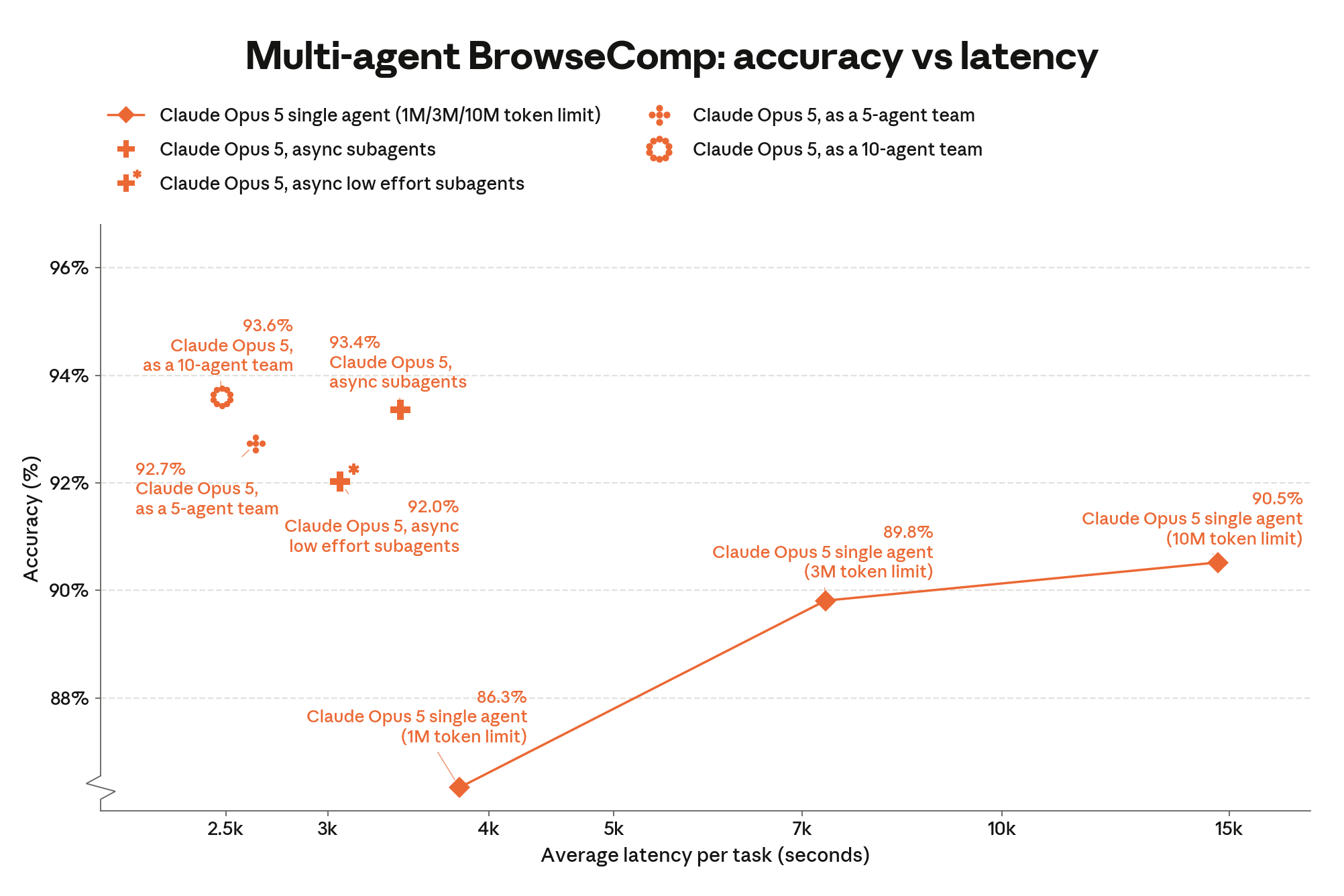
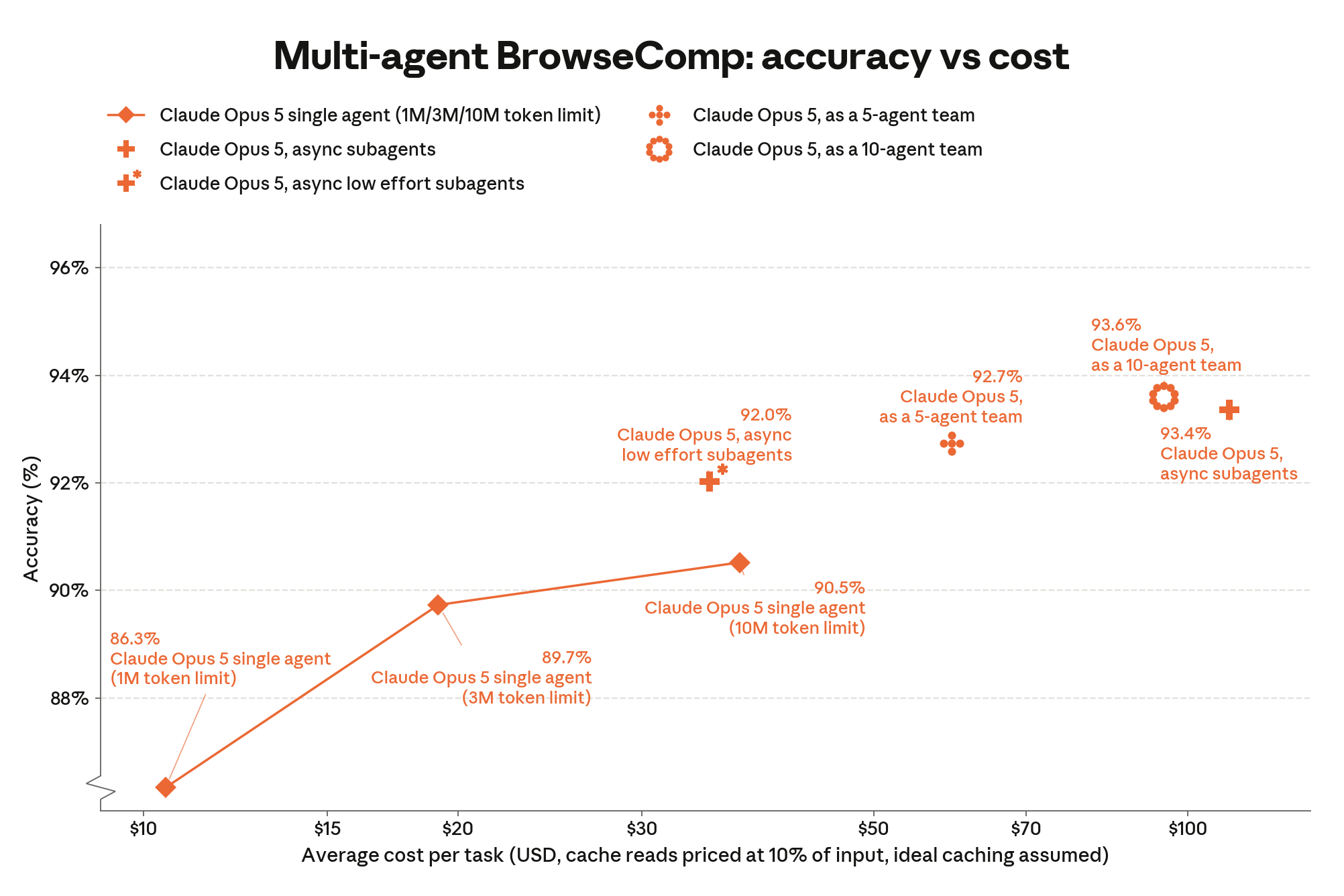
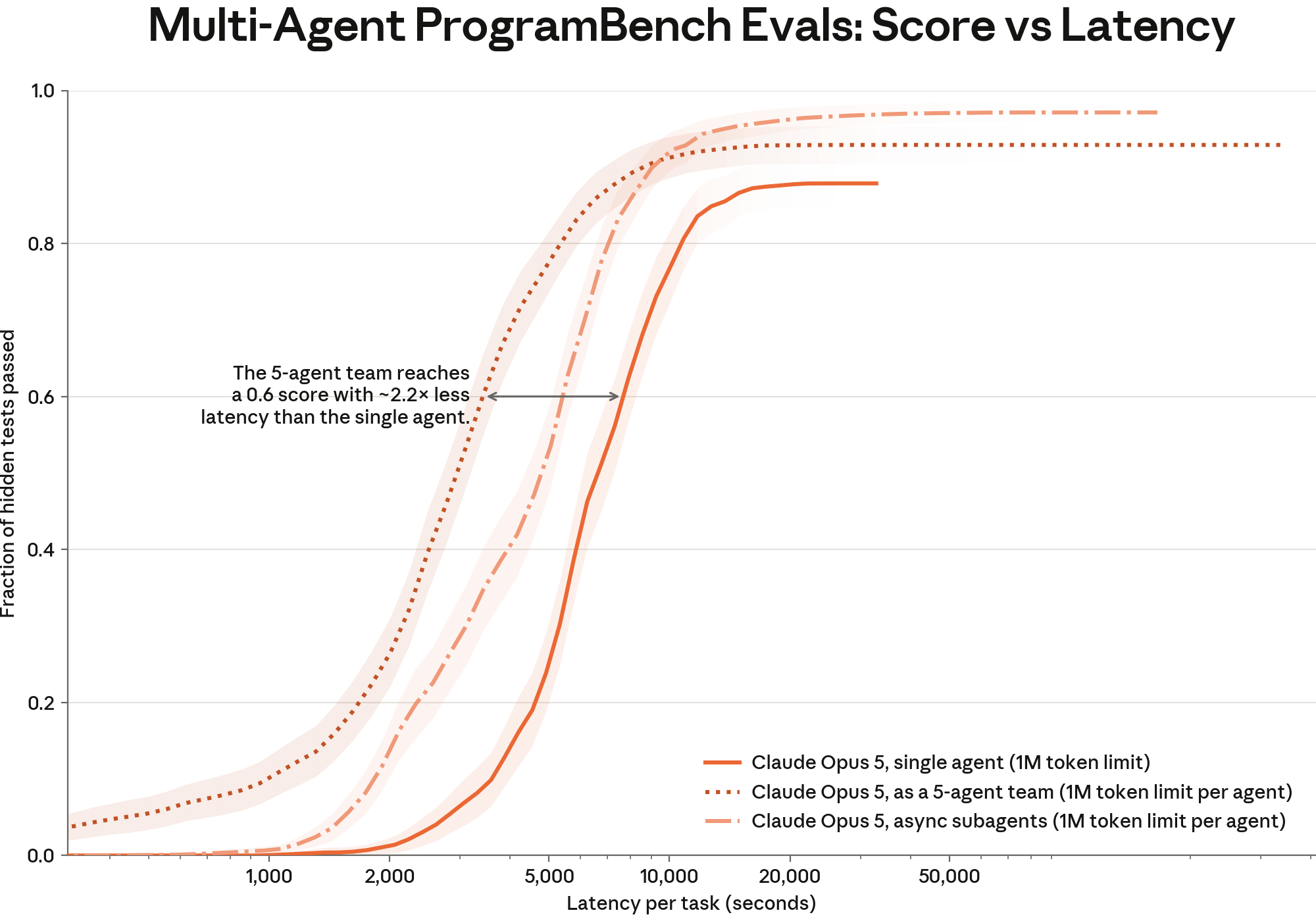
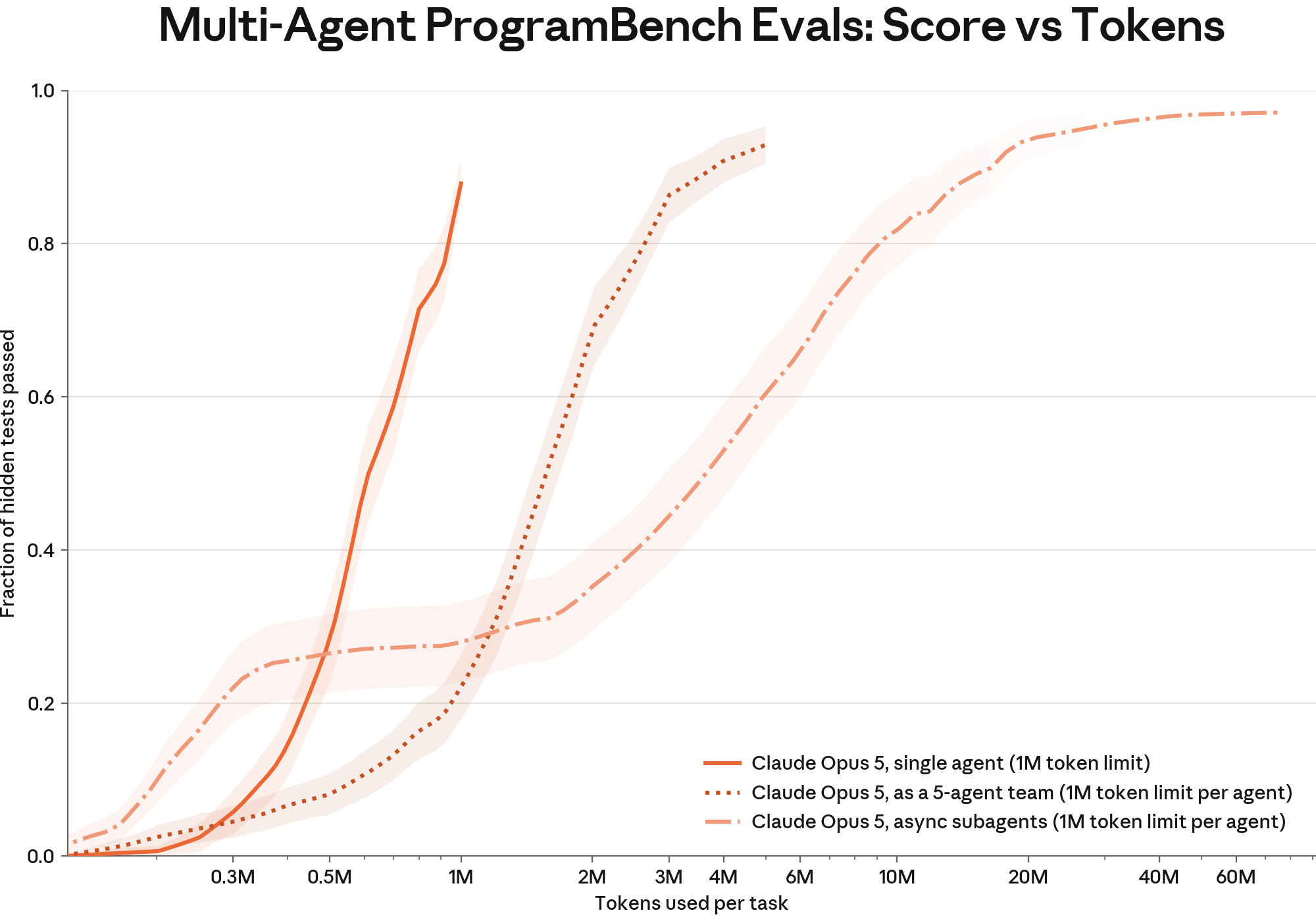
The numbered Opus 5 crew eval lives in the system card, not the launch blog. Section 8.11 runs two harnesses — an N-agent team (5 or 10 peers plus a lead) and async long-lived subagents — on BrowseComp and ProgramBench, and plots score against derived latency and against total tokens. Multi-agent Pareto-dominates the score–latency frontier; tokens and cost go up with agent count.